Launch offer — valid today only

📄 Digital book in PDF · read it on your phone or print it

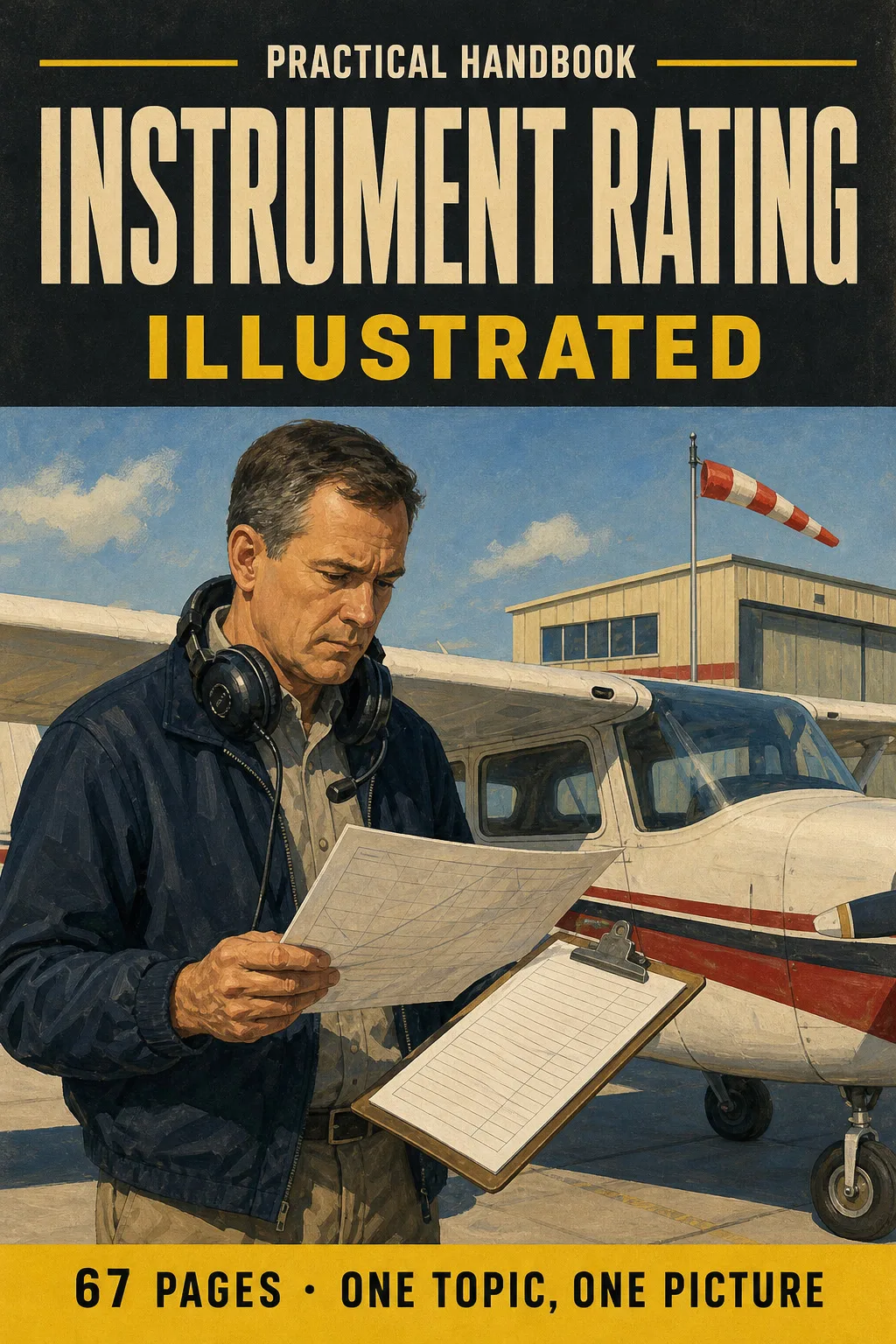
The Canadian Instrument Rating Written Exam in Drawings Pick the Hold Entry, Read the Plate, Check the Alternate

Pitot-static system, altimeter, compass errors, VOR, ILS, holding entries, approach plates, alternates and IFR weather. Every topic has its own page: first the drawing, then what you need to remember. 67 illustrated pages.

START STUDYING THIS WAY

🔒 Secure checkout · PDF by email · 30-day guarantee

Every topic, its own pageEach instrument, nav aid and procedure drawn, with the explanation beside it
67 illustrated pages9 parts, from the pitot-static system to the night before the exam
Up-to-date sourcesTransport Canada study guide, CARs and TC AIM
PDF by emailFormat

Look Inside the Book

Every page has one big drawing and a box with the numbers, rules and steps you need to know:

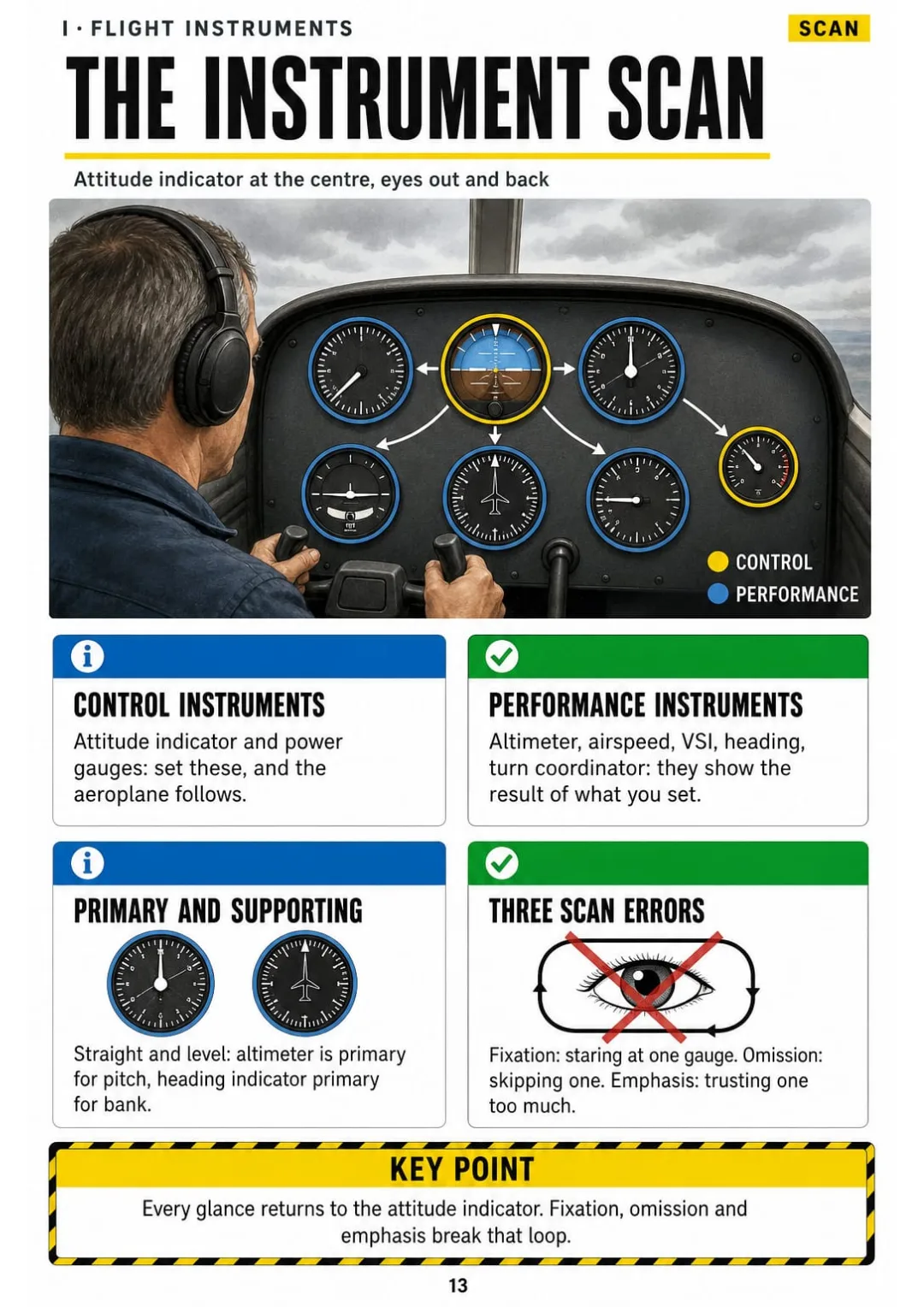
Radial scan from the AI; errors: fixation, omission, emphasis.
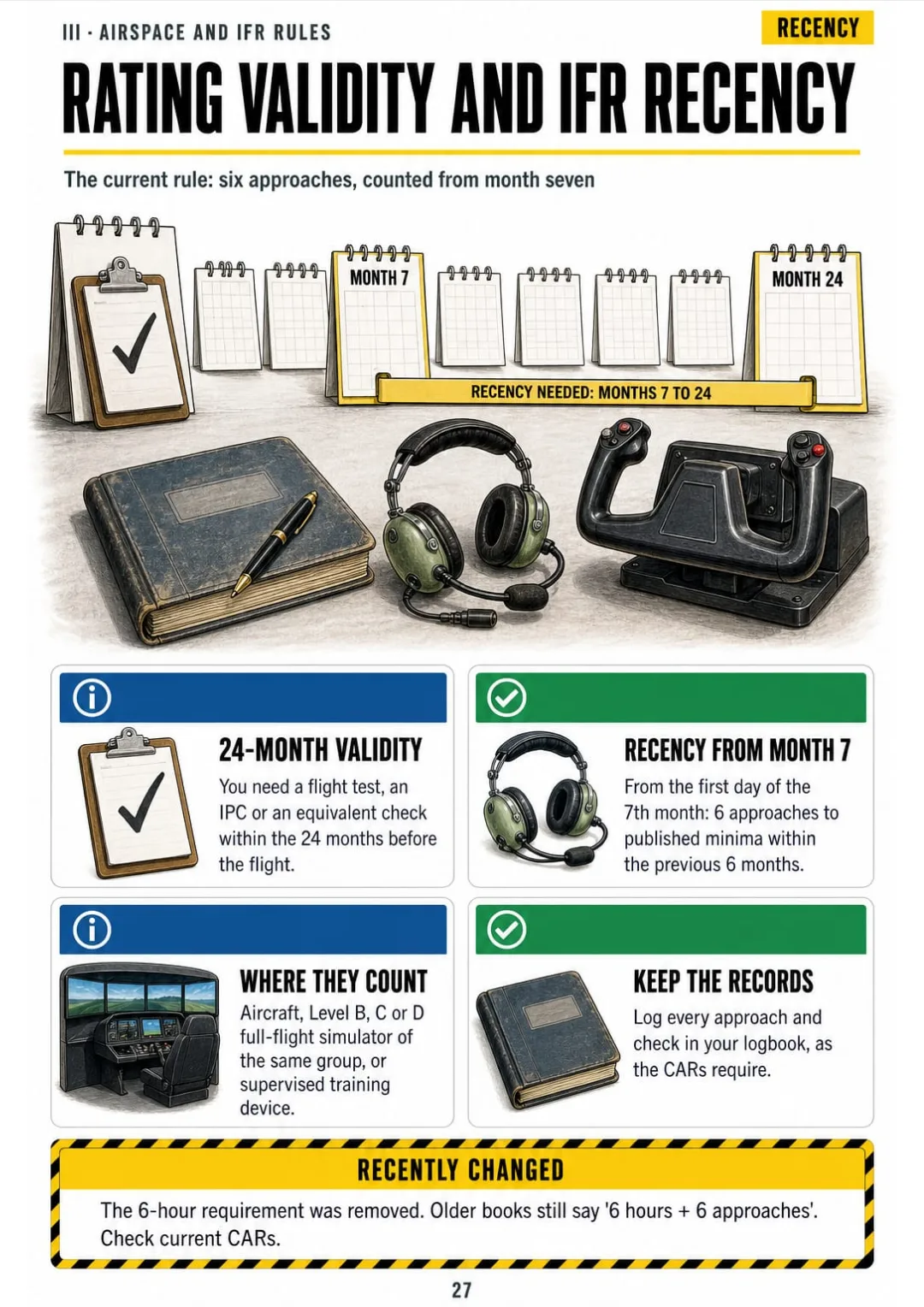
IFR recency since 17 June 2026: 6 approaches in 6 months, from month 7, no hours
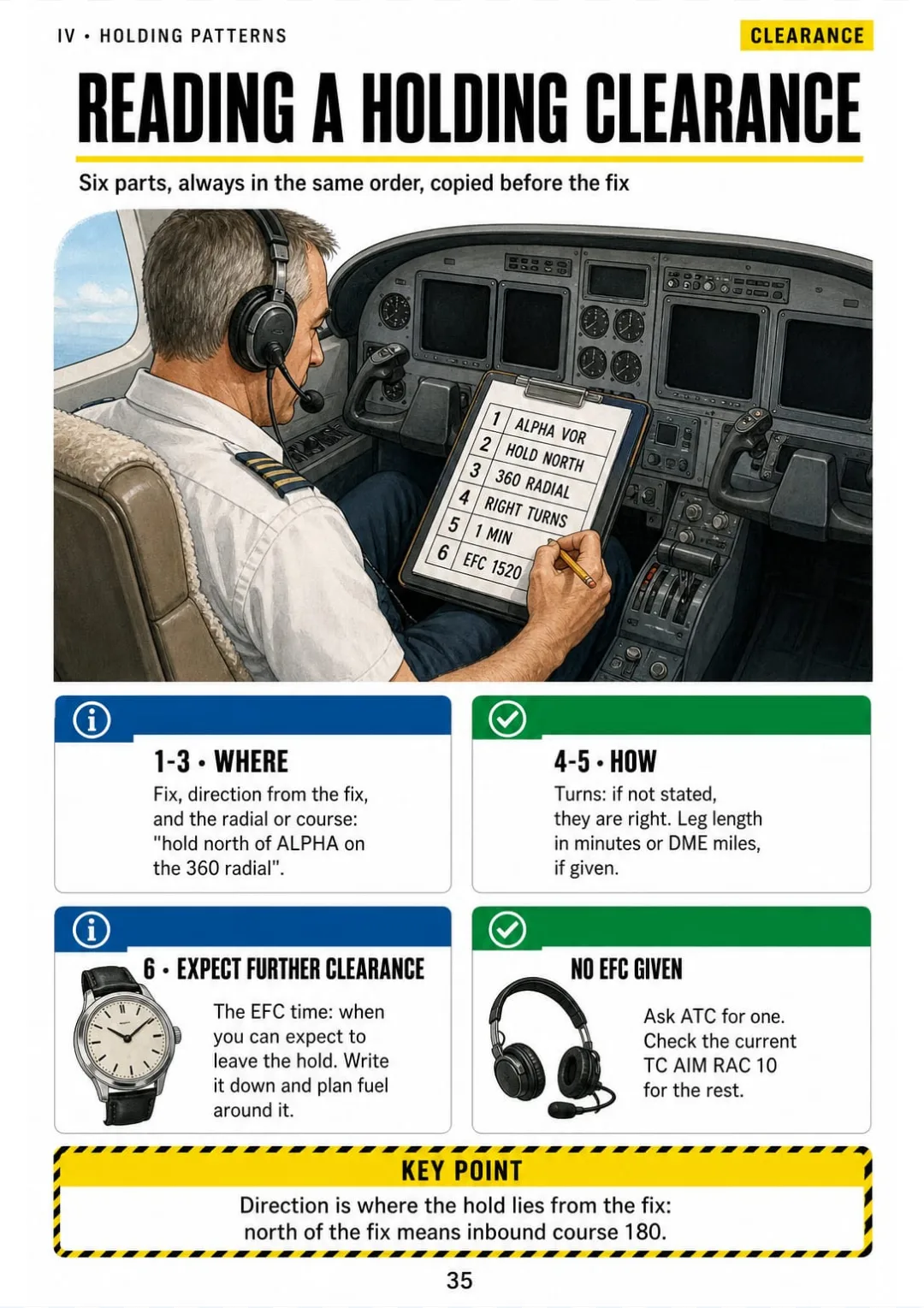
A holding clearance split into six parts: fix, direction, radial, turns, leg length, EFC
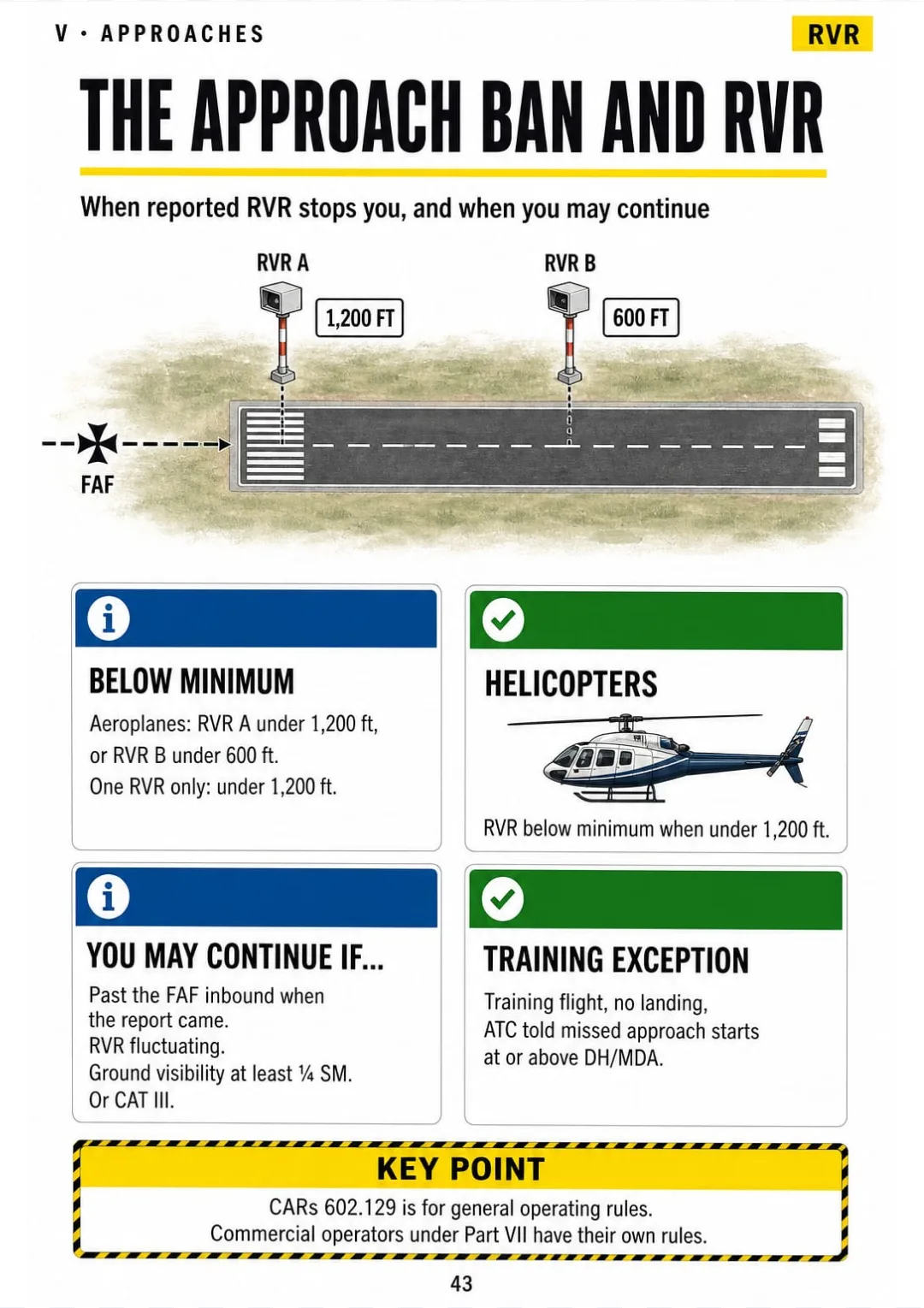
RVR A under 1,200 ft or RVR B under 600 ft: approach ban
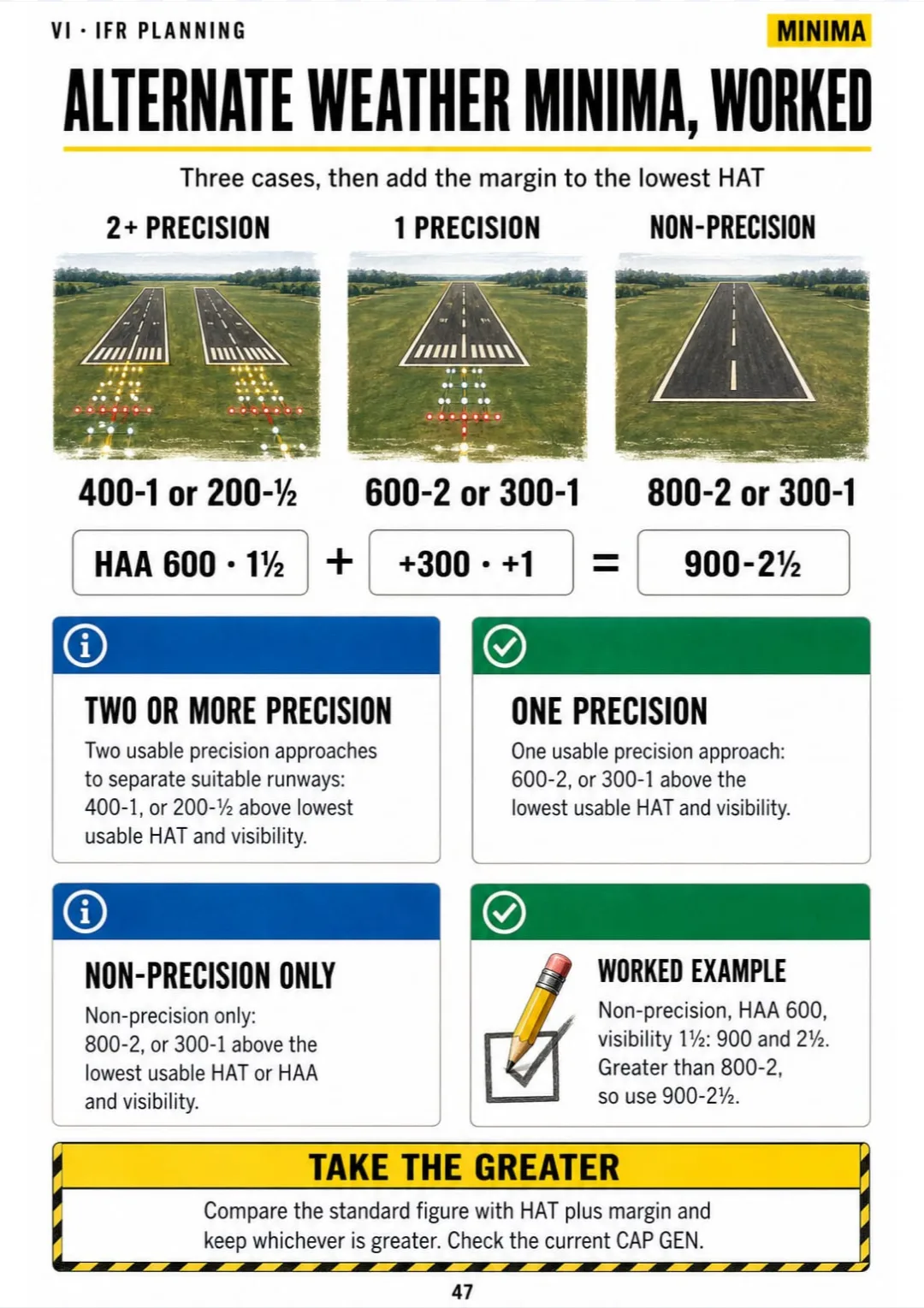
400-1, 600-2 and 800-2 are the standard alternate minima; add the margin to the lowest HAT and take the greater
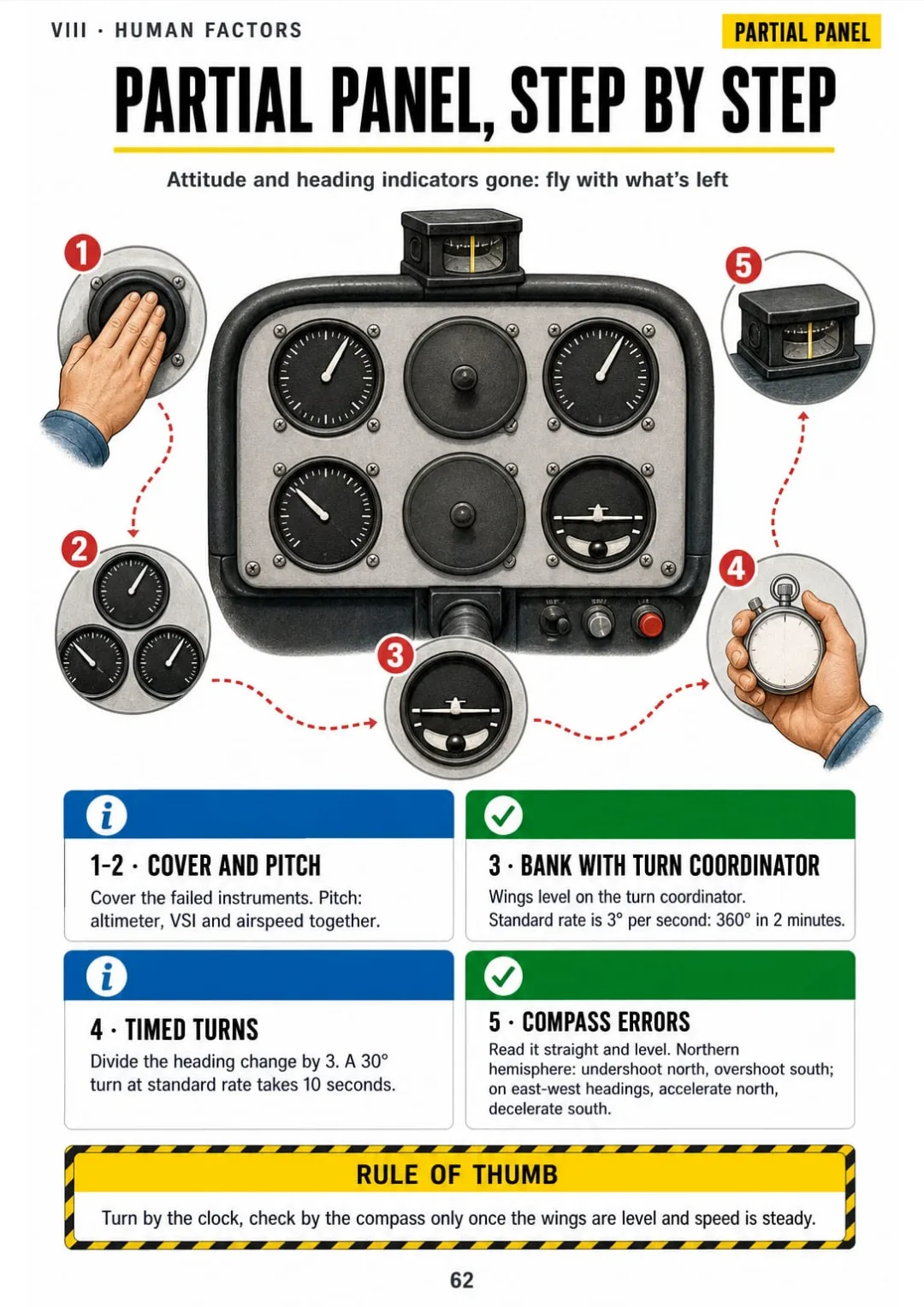
Standard rate is 3° per second: a 30° timed turn takes 10 seconds.
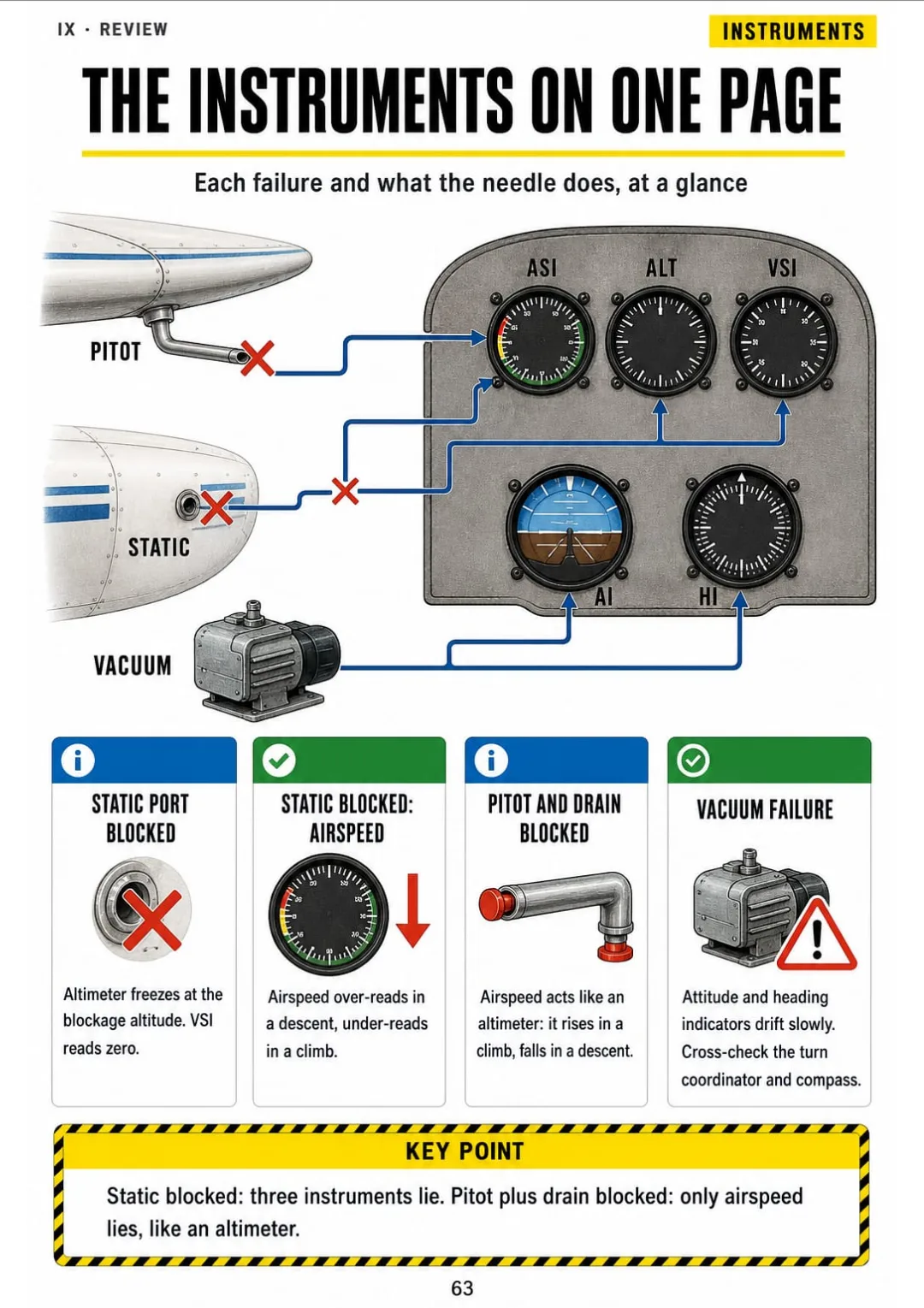
Static blocked: altimeter frozen, VSI at zero, airspeed wrong in climbs and descents.
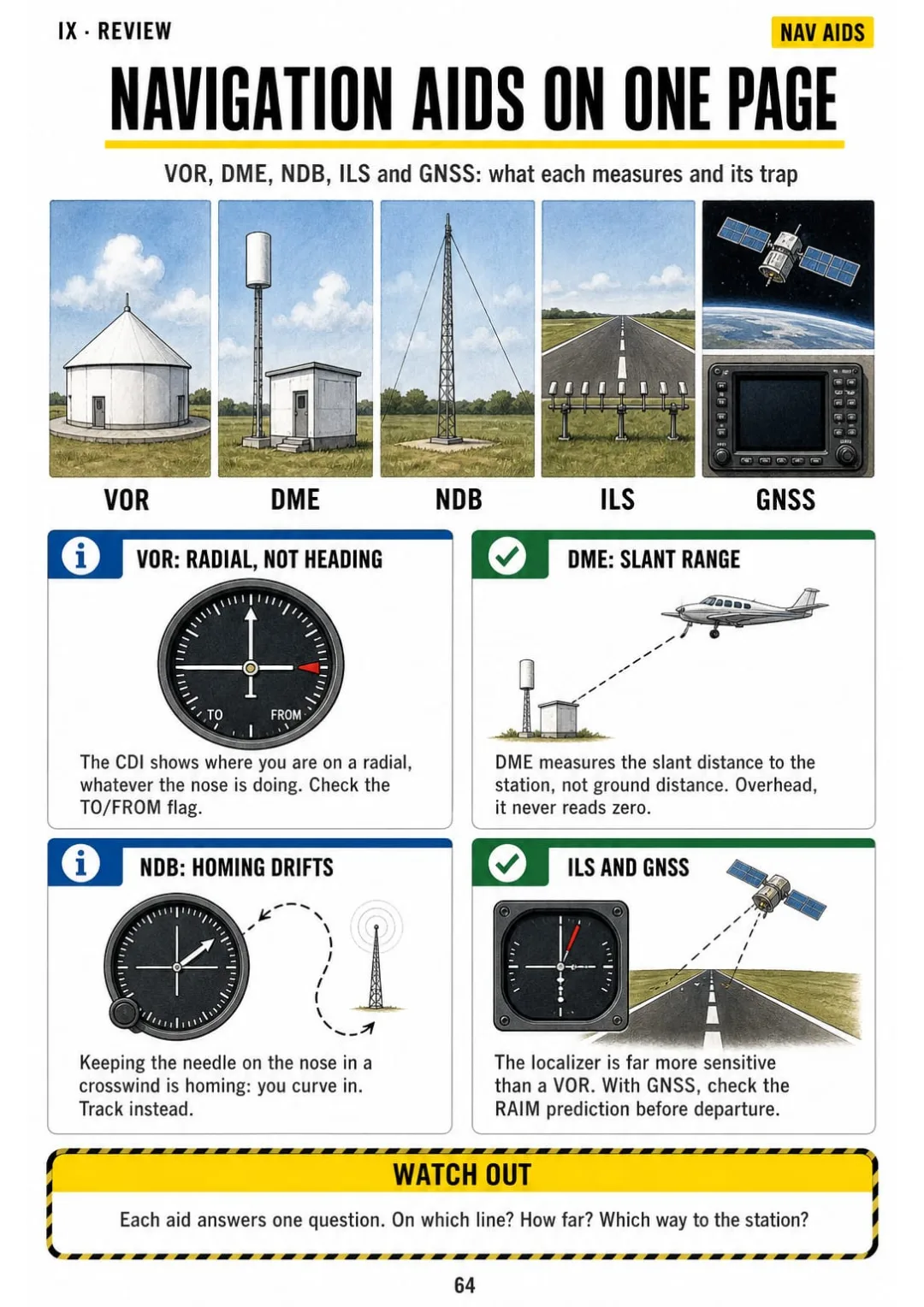
DME is slant range: overhead the station, it never reads zero.

Swipe to see more →

These are real pages from the book. The table of contents is the full one: 9 parts and 63 topics.

The Problem Isn't You. It's How It Was Explained to You.

You're in the briefing room. Your instructor says: "Hold at the fix, inbound on the 270 radial, right turns. What's your entry?" You stare at the heading indicator, and nothing comes.

You read the holding chapter. But the ground school book gives you the entries in paragraphs: sectors, degrees, headings, all in sentences. Sentences don't turn into a picture while someone waits for your answer.

A holding clearance split into six parts: fix, direction, radial, turns, leg length, EFC

In Instrument Rating Illustrated, the three entries are one drawing seen from above: the fix, the inbound course, the 70° line splitting direct, parallel and teardrop, and the path you fly in each one.

It's the same with the pitot-static system, the approach ban and RVR, alternate weather minima and partial panel turns: each one has its own page.

Next time you hear the clearance, you see the sectors, pick the entry and fly it, without going back to the manual first.

COMPARE FOR YOURSELF

The Same Topic, Two Ways to Study It

THIS
  • The manual: line after line
  • Recency rules explained only in words
  • You walk into the briefing unsure
An instrument rating may be exercised only where the holder meets the applicable recency requirements in addition to the validity period of the rating. Under the amended requirements, the pilot shall have completed, within the six months preceding the intended flight, the prescribed number of instrument approaches, which may be conducted in an aircraft or in an approved flight simulation training device, subject to the conditions specified. Where the requirement has not been met, the privileges of the rating shall not be exercised until currency is re-established by the prescribed means.
FOR THIS
  • Validity and recency in one drawing
  • The numbers in one box
  • You see it and you get it
IFR recency since 17 June 2026: 6 approaches in 6 months, from month 7, no hours
CONTENTS

Take a Look at the 9 Parts and 63 Topics

Flight instruments, radio navigation, Canadian airspace and IFR rules, holding patterns, approach plates, IFR flight planning, IFR weather, human factors and a final review: 67 pages, all illustrated

IThe Flight Instruments · pp. 5-13
  1. The Pitot-Static System, Drawn End to End
  2. Blocked Pitot, Blocked Static: What Each Instrument Shows
  3. The Altimeter and Its Setting
  4. Altimeter Setting Region vs Standard Pressure Region
  5. Cold Temperature: Why You Are Lower Than You Think
  6. Gyroscopic Principles: Rigidity and Precession
  7. Attitude Indicator, Heading Indicator, Turn Coordinator
  8. The Magnetic Compass and Its Errors
  9. The Instrument Scan
IIRadio Navigation · pp. 14-22
  1. VOR: How a Radial Is Made
  2. Reading the CDI and the TO/FROM Flag
  3. Intercepting and Tracking a Radial
  4. DME and Slant Range
  5. NDB and ADF: Relative Bearing
  6. Homing vs Tracking on the NDB
  7. The ILS: Localizer, Glide Path and Markers
  8. GNSS, RAIM and WAAS
  9. RNAV Approach Lines of Minima: LPV, LNAV/VNAV, LNAV
IIICanadian Airspace and IFR Rules · pp. 23-29
  1. Southern vs Northern Domestic Airspace
  2. Airspace Classes A to G for the IFR Pilot
  3. IFR Cruising Altitudes
  4. MEA, MOCA, Safe Altitude and Minimum Altitudes
  5. Instrument Rating Privileges and IFR Recency
  6. Transponder Codes and Equipment for IFR
  7. Communications Failure in IFR
IVHolding Patterns · pp. 30-35
  1. Anatomy of a Hold
  2. Holding Speeds and Timing
  3. The Three Entries: Direct, Parallel, Teardrop
  4. Choosing the Entry in Five Seconds
  5. Wind Correction in the Hold
  6. Reading a Holding Clearance
VApproach Plates and Approaches · pp. 36-44
  1. How a Canada Air Pilot Plate Is Laid Out
  2. The Plan View: Fixes, Safe Altitudes, Feeder Routes
  3. The Profile View: Step-Downs and the FAF
  4. The Minima Block: DH, MDA, HAT and Visibility
  5. Procedure Turns and Base Turns
  6. Flying a Precision Approach: The ILS
  7. Flying a Non-Precision Approach
  8. The Approach Ban
  9. Circling and the Missed Approach
VIIFR Flight Planning · pp. 45-51
  1. Filing the IFR Flight Plan
  2. Do I Need an Alternate?
  3. Alternate Weather Minima
  4. IFR Fuel Requirements
  5. The IFR Navigation Log, Worked
  6. Copying the Clearance: CRAFT
  7. SIDs, STARs and Departure Procedures
VIIIFR Weather · pp. 52-59
  1. Decoding a METAR
  2. Decoding a TAF
  3. Reading the GFA
  4. SIGMET, AIRMET and PIREP
  5. Airframe Icing: Clear, Rime and Mixed
  6. Fronts and IFR Conditions
  7. Fog and Low Ceilings
  8. Thunderstorms
VIIIHuman Factors in IFR · pp. 60-62
  1. Spatial Disorientation: The Leans and the Graveyard Spiral
  2. Somatogravic Illusion and Visual Illusions on Approach
  3. Partial Panel Flying
IXReview Before the Written Exam · pp. 63-67
  1. The Instruments on One Page
  2. Navigation Aids on One Page
  3. Holds and Approaches on One Page
  4. Planning and Weather Checklist
  5. The Night Before the Exam

One Page, One Topic, All Clear

Think of it this way:

You're established on the ILS, the tower gives you an RVR below the limit, and you need to know right now whether you can keep going or not.

In the book you open the approach ban page and see it drawn: the approach profile, the final approach fix where the ban is decided, and what you may do on each side of it.

400-1, 600-2 and 800-2 are the standard alternate minima; add the margin to the lowest HAT and take the greater

It's the same with the pitot-static system, holding entries, the minima block, alternate weather minima and airframe icing: each one on its own page.

Instrument Rating Illustrated is 9 parts and 63 topics, all drawn, with a final review section to go over everything before the written exam.

What you see drawn, you don't have to memorize.

What's Inside Instrument Rating Illustrated:

Ipp. 5-13

The Flight Instruments

The pitot-static system, blocked pitot and static, the altimeter and its setting, cold temperature errors, the gyros, compass errors and the scan.

IIpp. 14-22

Radio Navigation

How a VOR radial is made, the CDI and TO/FROM flag, intercepting and tracking, DME, NDB and ADF, the ILS, GNSS and RNAV lines of minima.

IIIpp. 23-29

Canadian Airspace and IFR Rules

Southern and Northern Domestic Airspace, classes A to G, IFR cruising altitudes, minimum altitudes, privileges and recency, transponder and comms failure.

IVpp. 30-35

Holding Patterns

Anatomy of a hold, speeds and timing, the three entries, choosing the entry fast, wind correction and reading a holding clearance, so the entry comes from the drawing, not from the manual.

Vpp. 36-44

Approach Plates and Approaches

How a plate is laid out, plan and profile views, the minima block, procedure turns, ILS and non-precision approaches, the approach ban, circling and the missed approach.

VIpp. 45-51

IFR Flight Planning

Filing the IFR flight plan, when you need an alternate, alternate minima, fuel, a worked nav log, copying the clearance and SIDs and STARs.

VIIpp. 52-59

IFR Weather

METAR, TAF and GFA decoded, SIGMET, AIRMET and PIREP, icing, fronts, fog and low ceilings, and thunderstorms.

VIIIpp. 60-62

Human Factors in IFR

The leans, the graveyard spiral, somatogravic and visual illusions on approach, and flying partial panel.

IXpp. 63-67

Review Before the Written Exam

The instruments, nav aids, holds and approaches each on one page, a planning and weather checklist, and the night before the exam.

At the end of the book: A final review section: instruments, nav aids, holds and approaches, planning and weather, each on one page.
Plus: 2 Free Books

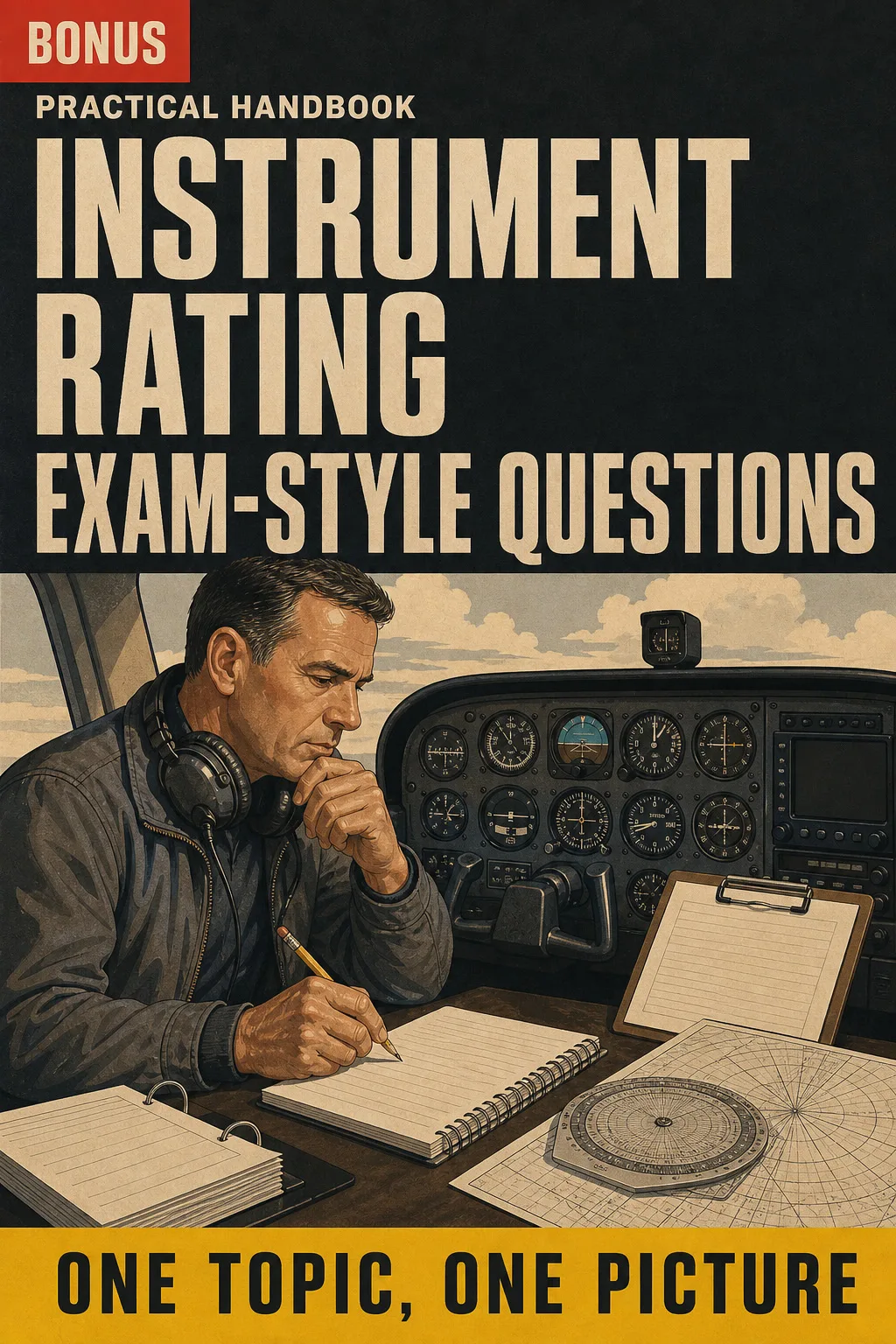
Instrument Rating Exam-Style Questions

BONUS 1: «Instrument Rating Exam-Style Questions»

Value on its own: US$ 17.90

Multiple-choice questions by topic with every answer explained, so you find your weak spots before the written exam, not during it.

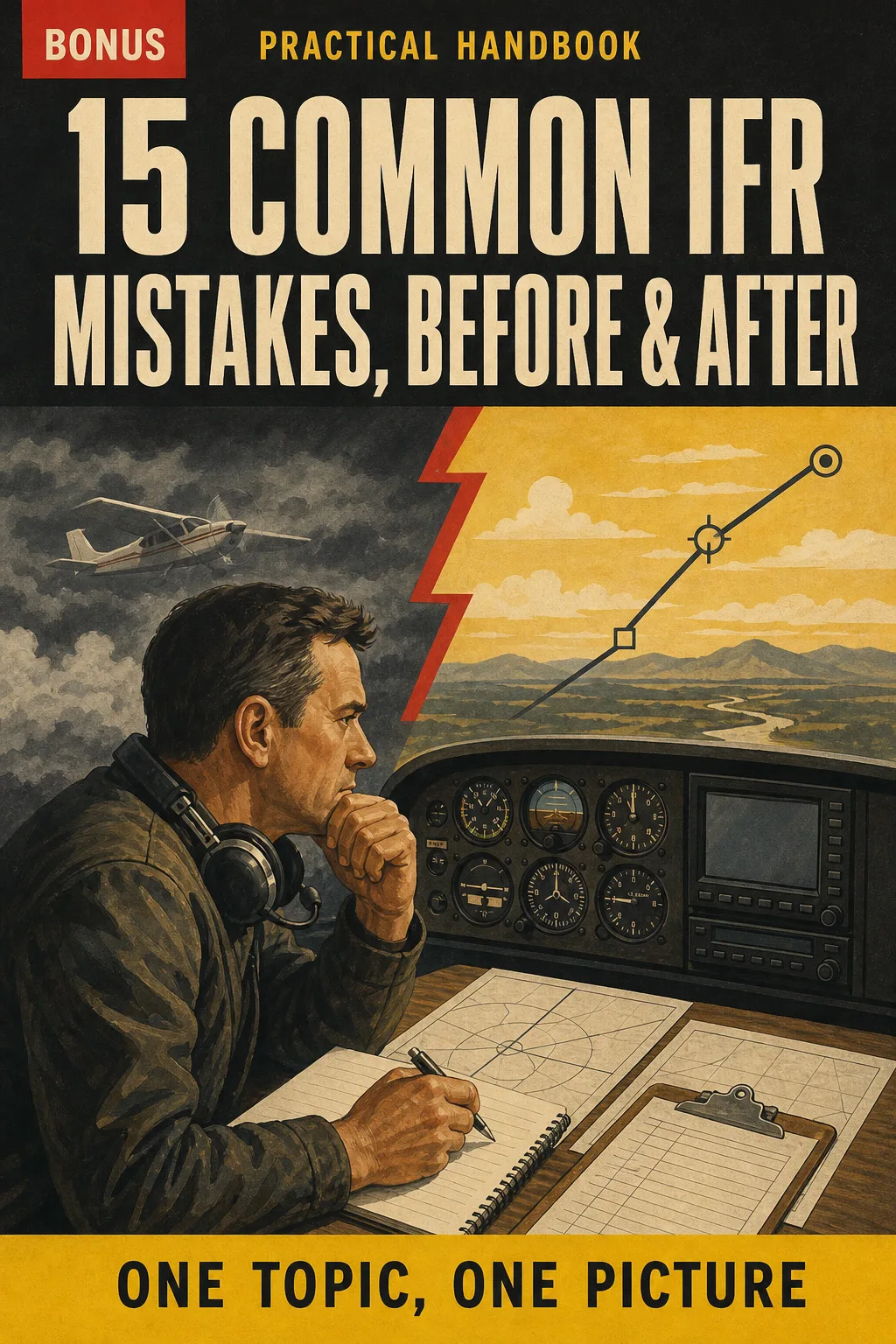
15 Common IFR Mistakes, Before & After

BONUS 2: «15 Common IFR Mistakes, Before & After»

Value on its own: US$ 14.90

The mistakes that come up most often (wrong holding entry, compass turning errors, altimeter setting traps) each drawn wrong and then right, ready to review the night before.

Instrument Rating Illustrated with 2 Free Books

  • Instrument Rating Illustrated: 67 illustrated pagesUS$ 63
  • BONUS 1: Instrument Rating Exam-Style QuestionsUS$ 17.90
  • BONUS 2: 15 Common IFR Mistakes, Before & AfterUS$ 14.90
  • High-resolution PDF to printIncluded
Total value US$ 95.80
YOUR PRICE:
US$ 27
You save US$ 68.80
YES, I WANT INSTRUMENT RATING ILLUSTRATED FOR US$ 27

📄 This is a digital PDF book sent to your email: nothing is printed or shipped.

Secure purchaseEncrypted payment30-day guarantee

PDF by email: We email you Instrument Rating Illustrated as a PDF, together with the two free books. It's a single payment: no installments, no extra charges.

Who This Book Is For

You're starting the instrument rating

You're starting the instrument rating

After years of VFR, you get the theory in order: how each instrument and nav aid works, drawn, before you get into the sim.

Your written exam is coming up

Your written exam is coming up

You review one topic per page in the same order, and the bonus questions show you your weak spots before the exam, not during it.

You're already instrument-rated

You're already instrument-rated

Holds, minima and alternates at a glance, printed and in your flight bag, before an IPC, a PPC or a low-ceiling day.

Everything You Get Today

US$ 95.80US$ 27
YES, I WANT INSTRUMENT RATING ILLUSTRATED FOR US$ 27

📄 This is a digital PDF book sent to your email: nothing is printed or shipped.

30DAYS
GUARANTEE

30-Day Guarantee

Try Instrument Rating Illustrated for 30 days, bonus books included.

We refund everything if the file won't open, if the book isn't what you see here, if you were charged twice or if the email doesn't arrive. Just email us.

You pay once. No subscriptions.

Frequently Asked Questions

Is it for me if I've flown VFR for years and I'm only now starting the instrument rating?

Yes. It doesn't replace your ground school book: it sits beside it. The book explains in paragraphs; here each topic is one drawing with its numbers in a box, so the theory you half know from flying falls into place. It assumes you already fly VFR: it isn't a learn-to-fly course.

Is it based on Canadian rules or on the FAA?

Canadian. It's checked against the Transport Canada study and reference guide for the instrument rating written exam, the CARs, the TC AIM and the Canada Air Pilot general pages: Canadian holding speeds, alternate minima, domestic airspace and the GFA. It isn't an FAA book with a new cover.

Is it official material?

No. It's an independent study book, not affiliated with Transport Canada or NAV CANADA. The approach plates in the book are examples we drew, not for navigation.

Does it replace ground school or flight training?

No. It's theory study material. It doesn't replace ground school, flight instruction or the current TC AIM.

Are the practice questions the ones on the exam?

No. They're written for this book, in the style of the exam, to practise each topic. They aren't official exam questions.

When and how do I get it?

The book and the 2 bonus books come as a PDF to the email you enter at checkout. Read them on your phone, tablet or computer, or print them.

Do I have to pay every month?

No. It's a single payment in Canadian dollars, with no subscription.

Can I have it on paper?

Yes. It's a printable PDF: print the whole book or just the pages you want in your flight bag.

How do refunds work?

You have 30 days. We refund everything if the file won't open, if the book isn't what you see on this page, if you were charged twice or if the email doesn't arrive: just email us.

Before You Close This Page

No more rereading without anything sticking.

Holding entries you see drawn, and that's it.

You walk into the written exam knowing where everything is.

Drawings make studying faster.

The book is right below.

One-time payment: US$ 27 · Guarantee: 30 days · PDF by email

YES, I WANT INSTRUMENT RATING ILLUSTRATED FOR US$ 27

📄 This is a digital PDF book sent to your email: nothing is printed or shipped.